From Drought to Dynasty: How the 2019 Bombers Forged an Identity That 2026 Must Reclaim
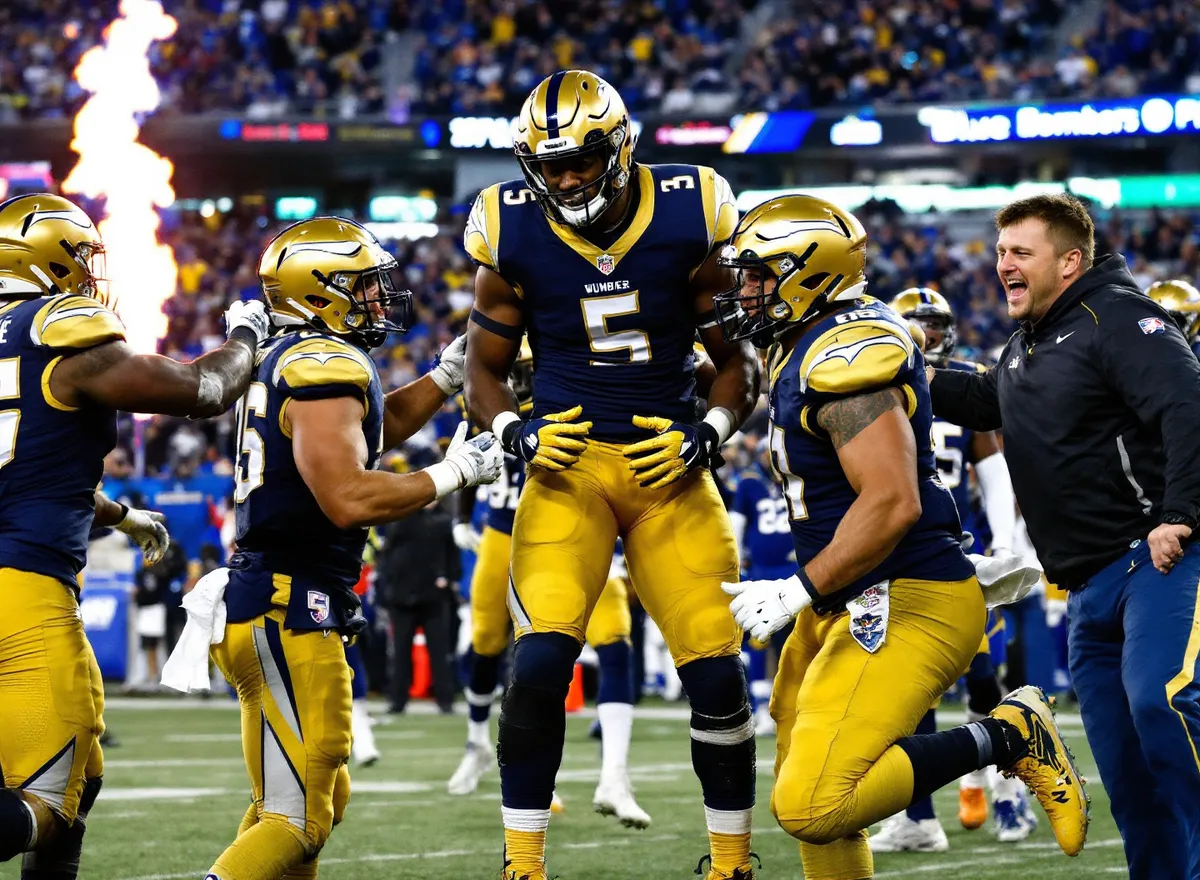
On the evening of July 24, 2026, the Winnipeg Blue Bombers walked off the field at Calgary’s McMahon Stadium dazed and frustrated. The scoreboard read Stampeders 52, Blue Bombers 30. It wasn’t just the margin; it was the manner of defeat. After the game, star running back Brady Oliveira told reporters, “I don’t know who we are right now.” For a franchise that has defined the CFL’s last half-decade with three Grey Cup rings and a fifth consecutive title-game appearance in 2024, those words stung. Yet for those who lived through the club’s darkest decades, Oliveira’s confession echoes the existential questions that once haunted an entire fanbase. The 2026 Bombers are not the first Winnipeg team to stare into an identity void—and the blueprint for emerging stronger already exists, written indelibly in 2019.
The Long Barren Years: 1990–2018
To understand the magnitude of what was achieved in 2019, one must rewind to the last true glory night before it. On November 25, 1990, the Bombers demolished the Edmonton Eskimos 50‑11 in the 78th Grey Cup. It was a coronation—a franchise’s 10th championship, powered by a ferocious defence and a balanced offense. No one in blue and gold imagined it would be the last for nearly three decades.
What followed was not a decade of irrelevance but a peculiarly painful sequence of near-misses that turned the Grey Cup into a ghost. In 1993, future Hall of Fame quarterback Matt Dunigan led the Bombers to a 14‑4 record, only to fall 33‑23 to the Eskimos in the West Final. In 2001, Khari Jones’s MOP season ended with a 27‑19 Grey Cup loss to Calgary, the first of four championship-game defeats in 18 years. The 2007 team, quarterbacked by Kevin Glenn, had the league’s best record (12‑5‑1) but lost Glenn to a broken arm in the East Final; backup Ryan Dinwiddie couldn’t stop a Grey Cup loss to Saskatchewan. In 2011, the Bombers returned to the big game only to be denied 34‑23 by the B.C. Lions. The drought stretched through regimes, from Jeff Reinebold to Mike Kelly to Tim Burke, sometimes bottoming out with a 3‑15 season in 2013.
Fans grew cynical. The IG Field debate—should the team leave its historic Osborne Stadium home?—became a proxy for deeper anxieties about the club’s viability. By the end of 2018, despite three consecutive playoff appearances under Mike O’Shea, the narrative was stuck: Winnipeg could reach the dance but never take home the crown. The drought had lasted 10,566 days.
Architects of a New Era: Walters, O’Shea, and the Slow Build
The turnaround began not with a single trade or draft pick but with a philosophical commitment. Kyle Walters, a former Bombers safety, became general manager in 2013. He hired Mike O’Shea, a Hall of Fame linebacker, as head coach for the 2014 season. Their partnership stressed patience, Canadian talent, and an almost stubborn belief that a punishing run game and a violent defence could win in a pass‑happy league.
The early years tested that belief. The 2014 team went 7‑11; 2015 was 5‑13. Critics howled. But Walters drafted core pieces: offensive lineman Patrick Neufeld, defensive end Jackson Jeffcoat, and later, global‑breaking talents like running back Andrew Harris, who returned to his hometown in 2016 as a free agent. By 2016, the Bombers were 11‑7 and won a playoff game; in 2017, 12‑6. The foundation was there, yet the 2018 West Final collapse—again to Calgary—prolonged the angst. O’Shea’s post‑game vow, “We’ll be back,” sounded less like a promise than a prayer.
The 2019 Turning Point: A Championship Forged in Adversity
If 2018 was the heartbreak, 2019 was the redemption that changed everything. Winnipeg started 8‑2, then lost its starting quarterback, Matt Nichols, to a season‑ending injury in Week 10. The season teetered. The Bombers traded for an aging, oft‑injured Zach Collaros at the October deadline—a move widely viewed as a desperate gamble. Collaros had played one game in two years; he could barely turn his head after a series of concussions. But with Chris Streveler’s wildcat packages complementing him, Collaros won his first start against Calgary, then led a 29‑28 comeback in the West Semi‑Final.
The identity of that team was forged in physicality. Defensive coordinator Richie Hall’s unit—anchored by Willie Jefferson, Adam Bighill, and Jeffcoat—led the league in sacks and takeaways. Andrew Harris, defying age, rushed for 1,380 yards and added 70 catches. In the Grey Cup against Hamilton, the blueprint was brutal perfection: Harris ran for 134 yards and a touchdown, Collaros managed a surgically efficient 17‑of‑23 for 147 yards, and the defence pummelled Dane Evans into four interceptions. The final: 33‑12. A 29‑year drought, dead.
“It’s never as bad as it seems, never as good as it seems,” O’Shea had repeated for years. In 2019, it was finally as good as it seemed.
What the 2026 Bombers Can Learn from Their Predecessors
The echoes of 2019 are not nostalgic wallpaper; they are a diagnostic tool for the 2026 team. After the 52‑30 loss in Calgary, with quarterback Zach Collaros nursing a neck injury and the offense searching for a pulse, Oliveira’s words—“I don’t know who we are right now”—could have been plucked from mid‑2019, when Nichols went down. The current Bombers still boast a core of champions: Oliveira himself, receiver Nic Demski, defensive back Deatrick Nichols, and a decorated coaching staff. Yet the identity that won three Grey Cups in four years (2021, 2022, and a 2024 title) has been smudged.
The 2019 team discovered itself by leaning into discomfort. They ran the ball when everyone expected pass, trusted a quarterback everyone had written off, and played defence with a fury that made every snap a fistfight. The 2026 Bombers have the pieces; they must re‑embrace the physical, run‑first mentality that Oliveira embodied in his 2024 Most Outstanding Player campaign. It’s not about recapturing the past but reanimating the principles that built the dynasty: resilience, identity, and a refusal to flinch when the league counts you out.
For fans, the lesson of 2019 is that droughts end not in moments of perfect alignment but in stubborn, unglamorous belief. The 2026 season is not a requiem—it’s a chapter that can still be written with the same ink. The mirror of history is clear: this team knows who it is. It just needs to remember.
← Back to all research